
Comprehensive Guide to Dental Crowns and Bridges: Materials, Types, and Treatment Insights
The global dental crowns and bridges market was valued at approximately $4.33 billion in 2023 and is projected to reach $4.67 billion in 2024, reflecting a compound annual growth rate (CAGR) of 7.9%. (thebusinessresearchcompany.com) This growth is driving practices to refine materials, span missing teeth, and integrate AI-driven marketing to capture high-value restorative cases. Healthcare executives face challenges in patient acquisition for complex restorative treatments and need clear insights into crown and bridge options, procedural workflows, cost drivers, and scalable marketing solutions. This guide defines crowns versus bridges, compares porcelain, zirconia, and metal crown materials, explores traditional, cantilever, and Maryland bridge designs, details digital workflow steps, examines AI-powered patient targeting, and outlines revenue optimization tactics. It concludes with market trends and cost benchmarks to inform strategic investment decisions. Readers will gain actionable knowledge to improve treatment acceptance, maximize practice efficiency, and deploy AI sales and marketing services as a competitive differentiator.
What Are Dental Crowns and Bridges? Definitions and Key Differences
Dental crowns cap a damaged tooth by encasing it in a custom restoration to restore durability and aesthetics, while bridges replace missing teeth by joining artificial units to adjacent structures to maintain chewing efficiency and smile continuity. Both restorations fall under fixed prosthodontics but serve distinct clinical purposes and preparation protocols.
Dental crowns reinforce weakened tooth structure following decay removal or root canal therapy, whereas dental bridges span edentulous spaces to prevent shifting of adjacent teeth and preserve occlusion. Understanding these fundamental differences guides treatment planning and communication with patients, ensuring optimal long-term outcomes.
| Restoration Type | Mechanism | Primary Benefit |
|---|---|---|
| Crown | Caps prepared tooth with a custom shell | Protects weakened tooth and improves aesthetics |
| Bridge | Attaches pontic to abutment teeth | Replaces missing teeth and restores function |
Crowns and bridges each address oral health needs through precise laboratory fabrication and clinical bonding, paving the way for material-specific considerations in subsequent sections.
What is a Dental Crown and How Does It Work?
A dental crown is a protective shell made of porcelain, zirconia, or metal that is bonded over a prepared tooth to reinforce structure, restore chewing ability, and enhance appearance. Preparation involves reducing tooth volume, taking an impression or digital scan, and fabricating a restoration tailored to occlusal dynamics. Crowns protect against fracture and wear, improving patient comfort and smile aesthetics.
Crown placement requires precise margin definition and cementation protocols to ensure seal integrity and minimize sensitivity. This process integrates digital dentistry tools—such as CAD/CAM scanning and milling—to streamline turnaround and enhance fit accuracy, setting the stage for material-based comparisons.
What is a Dental Bridge and When Is It Used?
A dental bridge is a fixed prosthesis that replaces one or more missing teeth by anchoring artificial pontics to adjacent natural or crowned teeth (abutments). Traditional bridges use full-coverage crowns on abutment teeth with a suspended pontic, while cantilever and resin-bonded variants employ different support mechanisms.
Bridges restore mastication, prevent neighboring tooth migration, and maintain facial profile. Selecting the appropriate type depends on abutment health, span length, and aesthetic demands, leading to nuanced distinctions discussed in later sections.
How to Compare Dental Crowns vs Bridges: Benefits and Limitations
Crowns address individual tooth restoration, offering superior durability and seamless shade matching for a single compromised tooth. Bridges cover gaps involving two or more teeth, distributing occlusal forces across abutments but requiring alteration of healthy adjacent teeth in conventional designs.
Key decision factors include:
- Extent of tooth damage versus tooth loss
- Health and number of abutment teeth
- Patient aesthetic and functional expectations
- Long-term maintenance and cost considerations
Selecting between crowns and bridges influences treatment workflow, laboratory requirements, and patient acceptance rates, which can be further optimized using AI-driven engagement strategies.
Which Dental Crown Materials Are Best? Porcelain, Zirconia, and Metal Options Explained
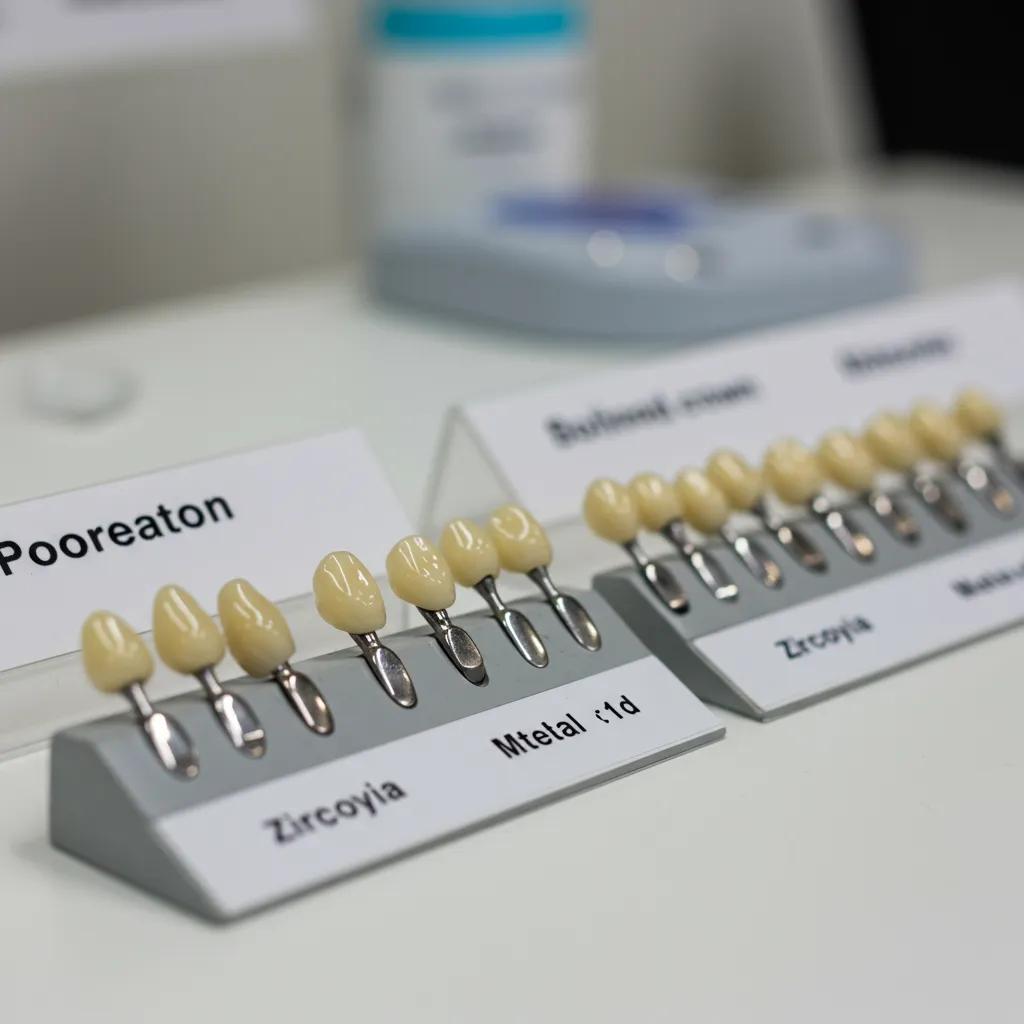
Porcelain, zirconia, and metal crown materials offer distinct durability, translucency, and cost profiles for restorative cases requiring strength and lifelike aesthetics. Material choice affects longevity, patient satisfaction, and overall practice revenue per case.
| Material | Durability (Years) | Cost Range (USD) | Key Benefit |
|---|---|---|---|
| Porcelain | 8–12 | $450–$650 | Excellent shade match for anterior |
| Zirconia | 10–15 | $550–$750 | High strength and biocompatibility |
| Metal (Gold) | 15+ | $500–$700 | Superior wear resistance |
Material selection influences crown longevity, patient comfort, and return-on-investment for restorative services, while AI-powered cost modeling can forecast profitability by material type.
What Are Porcelain Dental Crowns and Their Advantages?
Porcelain crowns are ceramic restorations prized for their natural translucency, stain resistance, and excellent aesthetic integration with adjacent teeth. The ceramic mechanism mimics enamel light-scattering properties, promoting lifelike results in the visible smile zone. Porcelain crowns resist wear and maintain surface luster, enhancing patient satisfaction and referral potential.
Advancements in reinforced ceramics and digital shading protocols further refine clinical outcomes, reducing chair time and remakes.
Why Choose Zirconia Dental Crowns? Durability and Aesthetics
Zirconia crowns leverage yttria-stabilized zirconia’s high flexural strength and fracture toughness to withstand heavy occlusal loads. The mechanism involves a polycrystalline lattice that resists crack propagation, offering robust posterior restorations without metal cores. Translucent zirconia variants now approach natural tooth aesthetics, combining resilience with cosmetic appeal.
Clinics adopting CAD/CAM zirconia workflows benefit from faster fabrication and fewer adjustments, optimizing operational efficiency.
AI in Restorative Dentistry: Trends and Prospects
Artificial intelligence (AI) possesses significant potential to revolutionise restorative dentistry, offering transformative solutions for diagnostic, prognostic, and treatment planning tasks. Traditional restorative dentistry encounters challenges such as clinical variability, resource limitations, and the requirement for data-driven diagnostic accuracy. AI’s capacity to address these issues by providing consistent, precise, and data-driven solutions is attracting considerable attention. This comprehensive literature review examines AI applications in caries detection, endodontics, dental restorations, tooth surface loss, tooth shade determination, and regenerative dentistry. While this review concentrates on restorative dentistry, AI’s transformative impact extends to orthodontics, prosthodontics, implantology, and dental biomaterials, demonstrating its versatility across various dental specialities. Emerging trends, including AI-powered robotic systems, virtual assistants, and multimodal data integration, are heralding groundbreaking innovations in restorative dentistry.
Artificial intelligence (AI) in restorative dentistry: current trends and future prospects, S Islam, 2025
The integration of AI in dentistry is not limited to marketing; it also plays a crucial role in enhancing diagnostic accuracy and treatment planning for restorative procedures.
When Are Metal Crowns Recommended? Types and Durability
Metal crowns—often gold or palladium-based alloys—provide exceptional longevity due to inherent corrosion resistance and malleability. Their mechanism distributes occlusal forces evenly, minimizing wear on opposing dentition. Metal crowns suit molar restorations where aesthetics are secondary and maximum durability is essential.
Recommendation criteria include patients with bruxism, limited interocclusal space, and high masticatory forces, ensuring minimal risk of restoration failure.
How Do Material Choices Affect Dental Crown Longevity and Cost?
Material attributes directly impact clinical lifespan, laboratory fees, and patient fees. Higher-strength materials like zirconia command premium costs but reduce remake rates and chair-side adjustments. Porcelain offers mid-range pricing with superior aesthetics, while metal crowns deliver long-term durability at a moderate price point.
Integrating predictive analytics within an AI marketing platform can model material-based case acceptance and forecast revenue, empowering executives to optimize service portfolios.
What Are the Different Types of Dental Bridges? Traditional, Cantilever, Maryland, and More
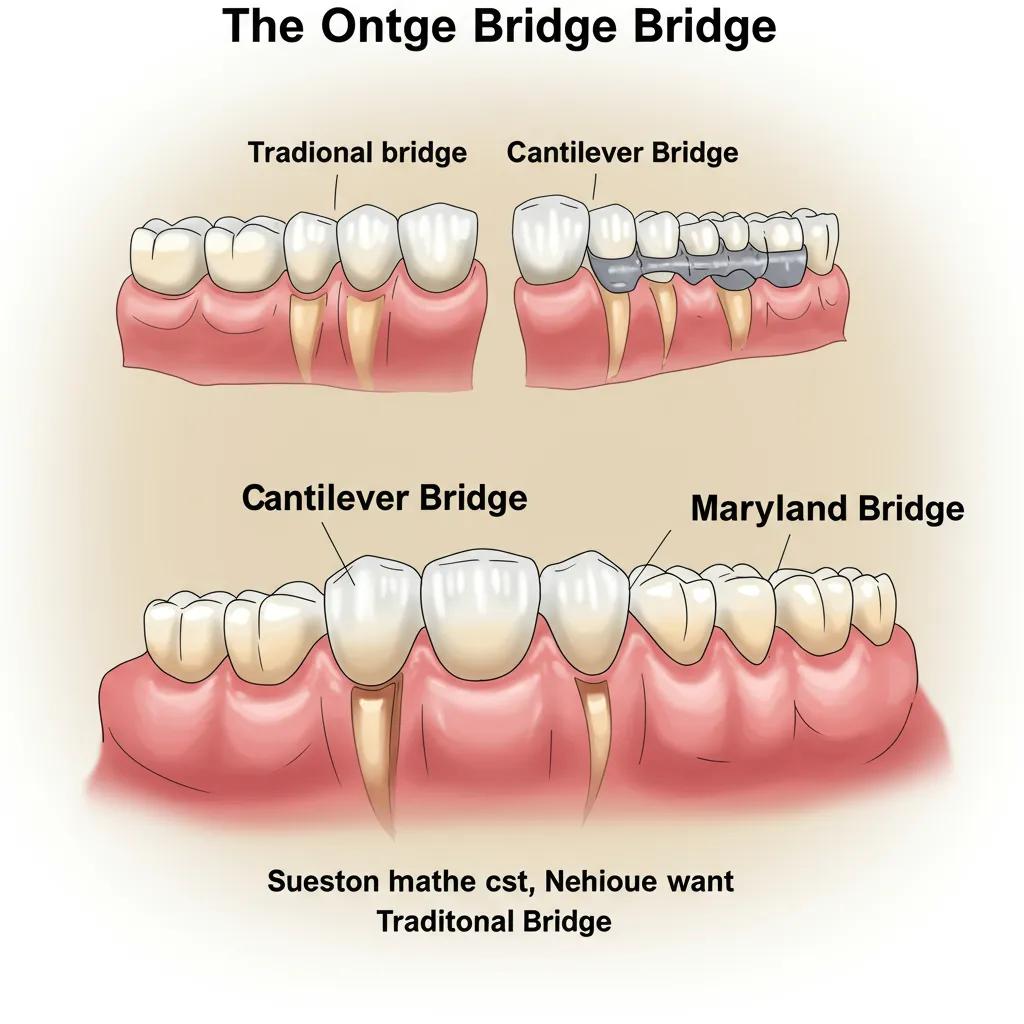
Traditional, cantilever, and Maryland bridges constitute fundamental fixed restorations, each employing unique support mechanisms and indications to replace missing teeth and preserve oral function. Bridge selection hinges on abutment integrity, span length, and aesthetic needs.
| Bridge Type | Support Mechanism | Ideal Use Case |
|---|---|---|
| Traditional | Crowns on both adjacent teeth | Multiple missing teeth in posterior or anterior |
| Cantilever | One-sided abutment crown | Single missing tooth with strong abutment |
| Maryland | Resin-bonded metal or ceramic wings | Single tooth in aesthetic zone with minimal prep |
How Does a Traditional Dental Bridge Work?
Traditional bridges replace missing teeth by anchoring a pontic to two crowned abutments on either side of the gap. Preparation involves reducing tooth structure, taking impressions or scans, and fabricating a multi-unit restoration. Cementation bonds the framework securely, restoring mastication and preventing adjacent tooth migration.
This design offers excellent strength for spans up to three teeth and integrates well with ceramic layered frameworks for aesthetic consistency.
What Is a Cantilever Bridge and When Is It Used?
A cantilever bridge uses a single abutment tooth to support a pontic, eliminating the need to involve both neighboring teeth. The mechanism relies on a well-positioned, healthy abutment capable of withstanding bending forces. Cantilevers are indicated when one side of the edentulous area lacks suitable abutment support or preservation of the opposing tooth is desired.
This conservative approach minimizes tooth preparation but demands careful occlusal design to avoid overload.
What Are Maryland Bridges? Benefits and Limitations
Maryland bridges feature a pontic bonded to etched metal or ceramic wings that adhere to the backs of adjacent teeth. The mechanism requires minimal preparation—often mere enamel etching—preserving natural tooth structure. Benefits include swift delivery, reduced cost, and reversibility. Limitations involve lower mechanical strength and potential debonding in high-stress areas.
Maryland bridges suit single anterior tooth replacement where aesthetics and tissue preservation are priorities.
How Do Bridge Types Affect Treatment Planning and Costs?
Bridge selection impacts laboratory complexity, material fees, and chair time. Traditional bridges incur higher fabrication costs due to multi-unit frameworks but deliver superior durability. Cantilever options reduce lab fees and prep time yet require strategic occlusal planning. Resin-bonded designs minimize invasiveness and fees but carry higher risk of debonding, influencing long-term maintenance costs.
AI-driven practice analytics can forecast cost-benefit ratios for each bridge type based on case volume and material usage.
How Does AI Improve Marketing and Patient Acquisition for Dental Crowns and Bridges?
AI enhances marketing and patient acquisition for dental crowns and bridges by analyzing patient demographics, treatment history, and behavioral signals to predict high-value leads, personalize outreach, and automate follow-ups that boost acceptance rates.
- Predictive lead scoring that identifies patients most likely to require crowns or bridges
- Automated messaging that educates patients on restorative benefits and material options
- Timely follow-up reminders to reduce no-show rates and expedite case consents
- Analytics dashboards that measure campaign performance and ROI
These capabilities improve conversion of consults into booked restorative cases, increasing revenue per patient and optimizing marketing spend.
How Can AI Identify and Target Potential Crown and Bridge Patients?
AI tools mine practice management data to segment patients by risk factors—such as extensive decay, previous restorations, or tooth loss—and predict those ready for restorative procedures. This mechanism uses machine learning models that correlate clinical indicators with treatment acceptance patterns, enabling targeted campaigns to high-value segments.
By focusing resources on likely candidates, practices increase case volume and reduce wasted marketing effort.
What Role Does Personalized AI Communication Play in Treatment Acceptance?
Personalized AI-powered communication delivers tailored education on crown versus bridge options, material benefits, and cost projections through preferred channels—email, SMS, or app notifications. This mechanism nurtures patients with custom content based on clinical profiles and behavioral triggers, fostering trust and informed decision-making.
Personalization lifts acceptance rates by addressing individual concerns and reinforcing treatment value.
How Does Predictive Analytics Forecast Demand for Crowns and Bridges?
Predictive analytics models aggregate historical treatment data, seasonal trends, and demographic shifts to forecast monthly and annual demand for crowns and bridges. The mechanism applies time-series algorithms and regression analysis to identify growth opportunities and resource bottlenecks.
Forecasts inform inventory planning, staffing, and marketing budgets, aligning operational capacity with revenue goals.
What Are Key Performance Indicators for AI-Driven Dental Marketing?
Practices measure AI marketing success with KPIs such as:
- Lead conversion rate for crown and bridge inquiries
- Average case value per restorative patient
- Patient acquisition cost per confirmed restorative case
- Treatment acceptance rate after AI-driven outreach
Tracking these metrics on a unified dashboard promotes continuous optimization of campaigns and supports executive decision-making.
What Are the Typical Steps and Considerations in Dental Crown and Bridge Procedures?
Dental crown and bridge procedures involve sequential preparation, impression, and fitting stages that restore form and function with precise laboratory-crafted restorations. Procedural consistency and digital integration enhance accuracy, reduce turnaround, and improve patient experience.
What Are the Preparation and Impression Steps for Crowns and Bridges?
Preparation begins with local anesthesia and removal of caries or unsupported enamel, followed by shaping abutment teeth with uniform taper for optimal retention. Practitioners then capture digital scans or conventional impressions, which guide laboratory fabrication. Temporary restorations protect prepared teeth while permanent units are produced.
Careful margin design, soft-tissue management, and impression accuracy determine final fit and longevity.
How Long Do Dental Crowns and Bridges Last?
Crowns typically last 8–15 years, with zirconia and gold alloys often exceeding a decade of function. Bridges average 7–12 years, depending on oral hygiene, occlusal forces, and material selection. Longevity hinges on patient habits, maintenance protocols, and meticulous clinical technique.
Wear patterns and margin integrity should be evaluated during routine exams to plan timely replacements.
What Are Common Risks and Aftercare Recommendations?
Sensitivity, marginal leakage, and restoration fracture represent primary risks. Aftercare includes:
- Gentle brushing with non-abrasive toothpaste
- Daily flossing under pontics or around crown margins
- Avoidance of hard or sticky foods
- Routine check-ups for occlusal adjustments
Effective aftercare mitigates complications and extends restoration lifespan.
How Does Digital Dentistry and CAD/CAM Technology Enhance Restorations?
Digital dentistry uses intraoral scanners, CAD software, and in-office milling to streamline workflows, eliminate traditional impression errors, and fabricate restorations in a single visit. This mechanism reduces remakes, decreases chair time, and improves margin fit, elevating patient satisfaction and practice profitability.
Integration with AI analytics further refines material selection and treatment planning.
How Can Dental Practices Optimize Revenue and Efficiency with AI for Crowns and Bridges?
AI streamlines patient communication, automates marketing campaigns, and informs data-driven management to boost revenue and operational efficiency in restorative dentistry. Practices gain competitive advantage by harnessing predictive insights and automated workflows.
How Does AI Streamline Patient Communication and Follow-Ups?
Automated AI chatbots and messaging platforms engage patients immediately after chart updates or risk assessments, scheduling consults and sending personalized educational content. This mechanism ensures timely follow-up, reduces administrative workload, and elevates patient experience.
By maintaining proactive engagement, practices capture more restorative cases and minimize lead leakage.
What Are the Benefits of Automated Marketing Campaigns for Restorative Dentistry?
AI-powered campaigns for crowns and bridges deliver dynamic content—such as animated procedure explainers and cost comparisons—based on patient profiles. Automated drip sequences nurture leads over weeks, build trust, and address objections systematically, resulting in higher conversion rates and increased case acceptance without manual effort.
How Can Data Analytics Inform Strategic Decision-Making in Dental Practices?
Data dashboards consolidate practice metrics—case volumes, material usage, campaign ROI, and patient retention—into visual reports. This mechanism reveals trends in restorative demand, identifies underperforming segments, and guides resource allocation. Executives leverage these insights to refine service offerings, adjust pricing, and plan capacity expansions.
Are There Case Studies Demonstrating AI Success in Dental Crown and Bridge Marketing?
One multi-site practice using AI-driven lead scoring reported a 35% increase in crown consultations within six months, while another clinic achieved a 28% rise in bridge treatment acceptance by deploying personalized messaging sequences. These examples illustrate how AI platforms transform restorative marketing with measurable revenue gains.
What Are the Costs and Market Trends for Dental Crowns and Bridges?
Dental crown cases typically range from $450 to $750 per unit, while bridge costs span $600 to $1,200 depending on span length and material selection. Market trends show a shift toward digital workflows, rising patient demand for aesthetic ceramic solutions, and growing adoption of AI in practice management.
Increasing cosmetic dentistry awareness drives growth, and predictive analytics forecasts a 7% annual market increase through 2030. Healthcare executives evaluating AI invest in platforms that deliver rapid ROI by boosting high-value treatment volumes and optimizing operational efficiency.
Dental practices combining advanced materials, digital dentistry, and AI marketing stand to capture a larger share of this expanding restorative market while improving patient satisfaction and profitability.
Healthcare executives seeking to lead in restorative dentistry should integrate data-driven marketing, digital fabrication, and AI-powered patient engagement. By aligning clinical excellence with advanced sales automation, practices can maximize treatment acceptance, streamline workflows, and sustain revenue growth. Explore how ahvanguard.com’s AI sales and marketing platform can revolutionize your dental crown and bridge services with predictive insights, personalized outreach, and measurable performance.
Zirconia Ceramics: Properties and Applications in Dentistry
Zirconia (ZrO2) based dental ceramics are considered advantageous materials with adequate mechanical properties for the manufacture of medical devices. Due to its very high compressive strength of 2000 MPa, ZrO2 can withstand diverse mechanical environments. During crack propagation upon the application of stress to the surface of ZrO2, a crystalline modification mitigates crack propagation. Furthermore, zirconia’s biocompatibility has been studied in vivo, leading to the observation of no adverse response upon the insertion of ZrO2 samples into bone or muscle.
Zirconia based dental ceramics: structure, mechanical properties, biocompatibility and applications, C Gautam, 2016
Zirconia’s exceptional strength and biocompatibility make it a leading choice for durable and aesthetically pleasing dental restorations.