
Discover the Best Dental Lab in Chicago for Quality Care and Precision Restorations
Choosing the right full-service dental laboratory is a pivotal decision for Chicago practices that want predictable esthetics, reliable fit, and efficient turnaround. This article explains what a full-service dental lab provides, how modern digital workflows and material science improve clinical outcomes, and which service lines deliver the best prosthetics for common indications. Dentists reading this guide will learn how crowns, bridges, implant restorations, removable prosthetics, veneers, and sleep apnea appliances are manufactured and verified, plus practical steps to send cases and evaluate turnaround. Common pain points—remakes, communication lags, incompatible digital files, and unclear timelines—are addressed with concrete workflows, materials comparisons, and quality-control checklists. The following sections cover why a networked lab can streamline practice operations, a service-by-service look at restorative options, the impact of intraoral scanning/CAD/CAM/3D printing, material trade-offs (zirconia, E.max, full cast), how to send a case to a responsive lab partner, real-world practice feedback, and an FAQ-style checklist for selection. Keywords such as chicago dental lab, full service dental lab chicago, digital dental lab chicago, and dental lab turnaround time chicago are woven throughout to support practical decision-making.
Why Choose a Full-Service Dental Lab in Chicago for Your Practice?
A full-service dental lab is a prosthetic manufacturing partner that combines skilled technicians, materials expertise, and end-to-end workflows to deliver crowns, bridges, implant prosthetics, dentures, veneers, and appliances. By centralizing services with one lab partner, practices reduce coordination overhead, limit remake risk through standardized protocols, and gain access to specialty technicians for complex cases. Operational benefits include integrated digital workflows, reliable communication channels, and capacity to scale for urgent requests or larger case volumes. Clinically, consistent material selection and technician oversight translate to predictable emergence profiles, shade matching, and occlusal performance. These combined advantages allow clinicians to focus on patient care while the lab manages fabrication, verification, and shipping logistics.
What Are the Benefits of Partnering with a Chicago Dental Lab Network?
Partnering with a networked dental lab ecosystem gives practices flexible capacity and access to specialized teams without negotiating multiple vendors. Network agility helps absorb surges in case volume, reducing practice delays during busy periods and offering priority production pathways for urgent restorations. Clinically, the network model provides specialist technicians in implants, esthetics, and removable prosthetics who collaborate on complex restorative planning. Operationally, centralized account support and real-time communication reduce administrative friction and improve case tracking and predictability. These attributes lead to faster clinical cycles and fewer chairside adjustments, which improves patient satisfaction and practice efficiency.
How Does Core 4 Dental Ensure Quality Dental Restorations in Chicago?
Core 4 Dental ensures quality through standardized digital protocols, material selection guidelines, and multi-stage verification between design and final finishing. The networked model emphasizes digital scan acceptance from major intraoral scanners, CAD/CAM design review, and technician oversight during milling, sintering, and staining/characterization. Quality control typically includes design review, technician inspection, photographic shade verification, and a final fit check before shipment to the ordering clinician. By combining specialist technicians with automated data exchange and standardized QC steps, a networked lab reduces variability and the likelihood of remakes, while preserving flexibility for urgent or custom requests.
What Services Does a Full-Service Dental Lab in Chicago Offer?
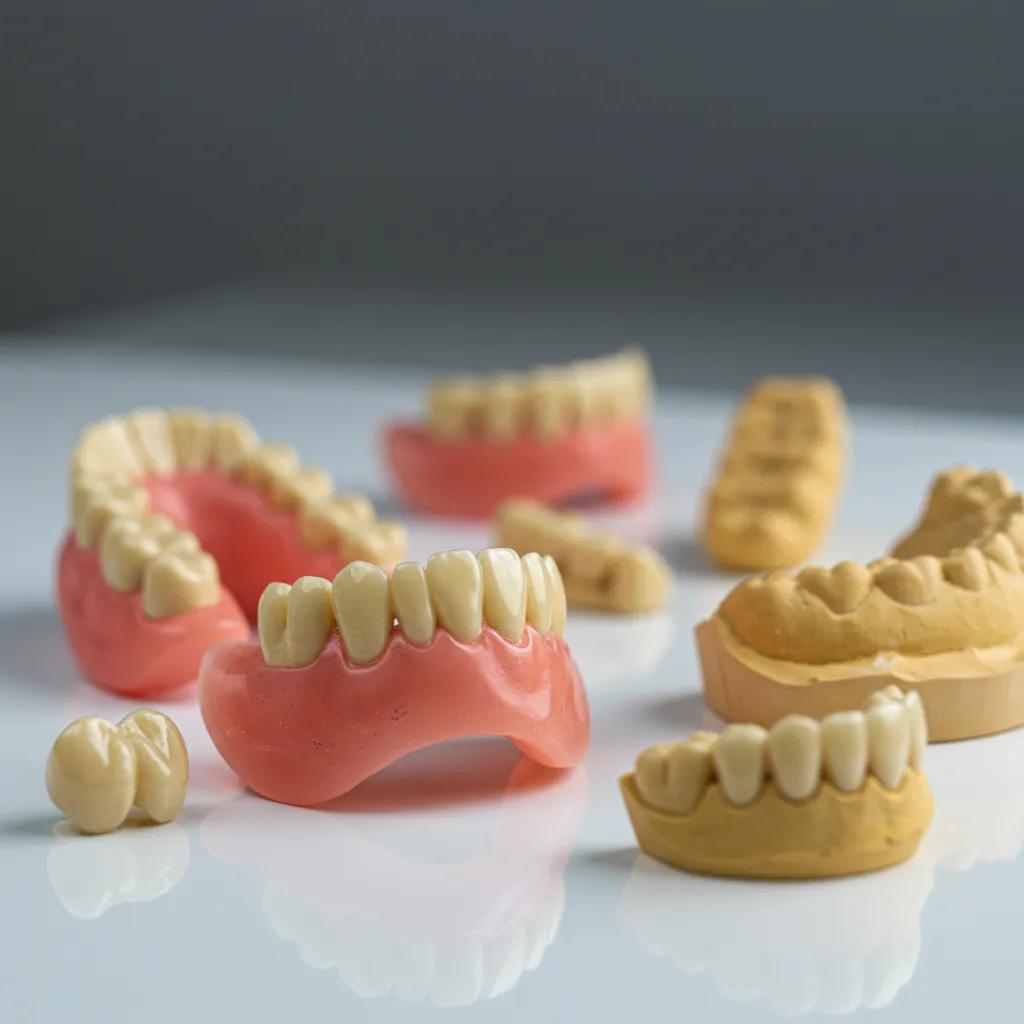
Full-service dental labs deliver a comprehensive portfolio of prosthetic and appliance solutions that support general and specialty restorative workflows. Typical offerings include crowns and bridges fabricated in zirconia, E.max, and full cast; implant prosthetics with custom abutments and surgical guides; removable dentures and partials with digital denture options; orthodontic aligners and retainers; veneers with layered or pressed porcelain; and sleep apnea appliances and night guards. Each service line carries specific clinical indications and material choices: for example, choose implant-retained overdentures for edentulous arches requiring retention, or veneers for conservative anterior esthetics. The single-vendor approach simplifies case management and provides consistent service-level expectations across these product lines.
Which Chicago Dental Lab Services Deliver the Best Prosthetics and Restorations?
Delivering excellent prosthetics requires integration of material science, digital design, and technician expertise from impression or scan through final delivery. High-quality crowns and bridges rely on accurate margin capture, CAD design, and precise CAM milling or pressing, followed by controlled sintering and finishing. Implant prosthetics demand restorative-driven planning, compatible scan-body workflows, and custom abutments to achieve ideal emergence and occlusal function. Removables combine esthetic tooth selection, base materials, and occlusal schemes to restore comfort and function. The following table compares common prosthetic types by material options, typical turnaround, and clinical indications to guide treatment selection.
Different prosthetics have distinct indicators, timelines, and material options that influence case planning and patient counseling.
| Prosthetic Type | Material / Options | Typical Turnaround & Clinical Indication |
|---|---|---|
| Crowns & Bridges | Zirconia, E.max, Full cast | 5–10 business days standard; esthetic anterior cases use E.max, high-load posterior use full cast or high-strength zirconia |
| Implant Prosthetics | Custom abutments, zirconia crowns, hybrid restorations | 7–14 days depending on custom components; indicated for single-to-full-arch restorations needing precise emergence profiles |
| Removable Dentures | Acrylic, digital-printed bases, flexible partials | 7–21 days; used for full-arch replacement, interim prostheses, or cost-effective solutions |
| Veneers | Porcelain, pressed ceramics | 7–14 days with try-in workflow; ideal for conservative anterior esthetic rehabilitation |
How Are Crowns and Bridges Fabricated with Precision in Chicago Dental Labs?
Precision fabrication begins with accurate capture—digital scan or conventional impression—and proceeds through CAD design, CAM milling or pressing, and controlled post-processing like sintering, staining, and glazing. Digital design enables margin refinement and anatomy libraries, which reduce manual variability and improve repeatability across cases. CAM settings are adjusted by material—zirconia sintering profiles differ from lithium disilicate milling parameters—so technician expertise matters to avoid fit issues or chipping. Final QC includes internal fit checks, occlusal verification, and photographic shade confirmation before shipment to the practice. These steps together minimize remakes and improve first-time insert success.
What Makes Chicago Dental Implant Labs Stand Out for Quality Care?
Implant-focused labs excel when they offer restorative-driven planning, compatibility with multiple implant systems, and production of custom abutments and surgical guides to align surgical and prosthetic goals. Digital planning workflows integrate CBCT-derived data and intraoral scans to design surgical guides and provisional prosthetics that guide predictable outcomes. Labs that maintain cross-system compatibility and clear communication with clinicians reduce the risk of misfit components and ensure precise emergence profiles. Technician-driven customization of abutment contour and restorative margins improves esthetics and tissue health in single and multi-unit implant cases.
CAD/CAM Technology in Contemporary Dentistry: Applications and Advantages
Information and communication technologies have been integrated into the healthcare sector, including the field of modern dentistry. CAD/CAM application in dentistry refers to the process of fabricating finished dental restorations through the precise milling of pre-formed ceramic blocks. CAD/CAM is an acronym for Computer-Aided Design (CAD) and Computer-Aided Manufacturing (CAM), specifically denoting computer-aided design and computer-aided manufacturing of inlays, onlays, crowns, and bridges. CAD/CAM technology fundamentally enables the creation of two-dimensional and three-dimensional models and their physical realization using numerically controlled machinery. To enhance operational efficiency, reduce costs, improve user/patient satisfaction, and ultimately achieve profitability, numerous dental practices globally are focusing on the implementation of modern IT solutions in their daily operations.
The application of CAD/CAM technology in Dentistry, 2017
Digital technologies vary by application and impact on accuracy, speed, and cost; the table below compares major digital tools by use case and expected benefit.
| Technology | Use Case | Benefit / Turnaround Impact |
|---|---|---|
| Intraoral Scanner | Impression capture for crowns, implants, aligners | Reduces patient discomfort; eliminates shipping of impressions; faster data transfer |
| CAD/CAM | Digital design and milling | Enhances repeatability; enables sophisticated design libraries and margin control |
| 3D Printing | Models, surgical guides, interim restorations | Rapid prototyping and reduced lead time for guides and splints; cost-effective models |
What Is the Role of Intraoral Scanners in Chicago Dental Labs?
Intraoral scanners replace analog impressions with high-resolution digital captures that improve patient experience and data fidelity for lab workflows. Scanner interoperability and acceptance of common file formats allow labs to receive standardized datasets that feed directly into CAD software, minimizing transcription errors. Good scan technique—clear soft-tissue retraction, margin definition, and occlusal captures—reduces adjustments at try-in and improves first-time fit. Practices that follow scanner best practices typically experience lower remake rates and faster turnaround for restorations, improving scheduling and patient satisfaction.
How Does CAD/CAM Technology Enhance Chicago Dental Restorations?
CAD/CAM systems increase repeatability and design precision by using digital libraries, margin refinement tools, and material-specific CAM strategies to produce consistent results. Digital design enables technicians to optimize occlusal morphology, contact points, and emergence profiles before committing to milling or printing. Material-informed CAM settings—such as toolpath strategies for zirconia versus lithium disilicate—reduce postsurface adjustments and enhance marginal integrity. As a result, CAD/CAM reduces manual variability, shortens laboratory cycles, and supports more predictable clinical outcomes.