Custom Dental: Comprehensive Guide to Personalized Dental Prosthetics and Lab Services
Personalized dental prosthetics deliver fits so exact that patients often forget they’re wearing replacements. This guide unpacks how custom dental solutions leverage state-of-the-art lab services to maximize fit, function, and aesthetics while reducing remakes and chair time. You’ll discover what custom prosthetics are and why they matter, which digital technologies power modern labs, how rigorous quality control safeguards outcomes, the main product types and their materials, typical turnaround times, partnership advantages for dental practices, best-in-class material choices, and answers to common service concerns. Whether you’re a dental professional seeking reliable lab support or a clinician exploring next-generation prosthetic options, this comprehensive resource will equip you to deliver confidence-inspiring restorations.
What Are Custom Dental Prosthetics and Their Key Benefits?
Custom dental prosthetics are individually crafted restorations that precisely replicate a patient’s oral anatomy using tailored digital design and manufacturing workflows, improving functional fit and boosting long-term comfort and aesthetics. By capturing unique anatomical landmarks and occlusal relationships, personalized restorations reduce adjustment visits and enhance chewing efficiency. For example, a custom-designed crown can restore proper force distribution and blend seamlessly with adjacent teeth, elevating both function and smile confidence.
What Types of Custom Dental Prosthetics Are Available?
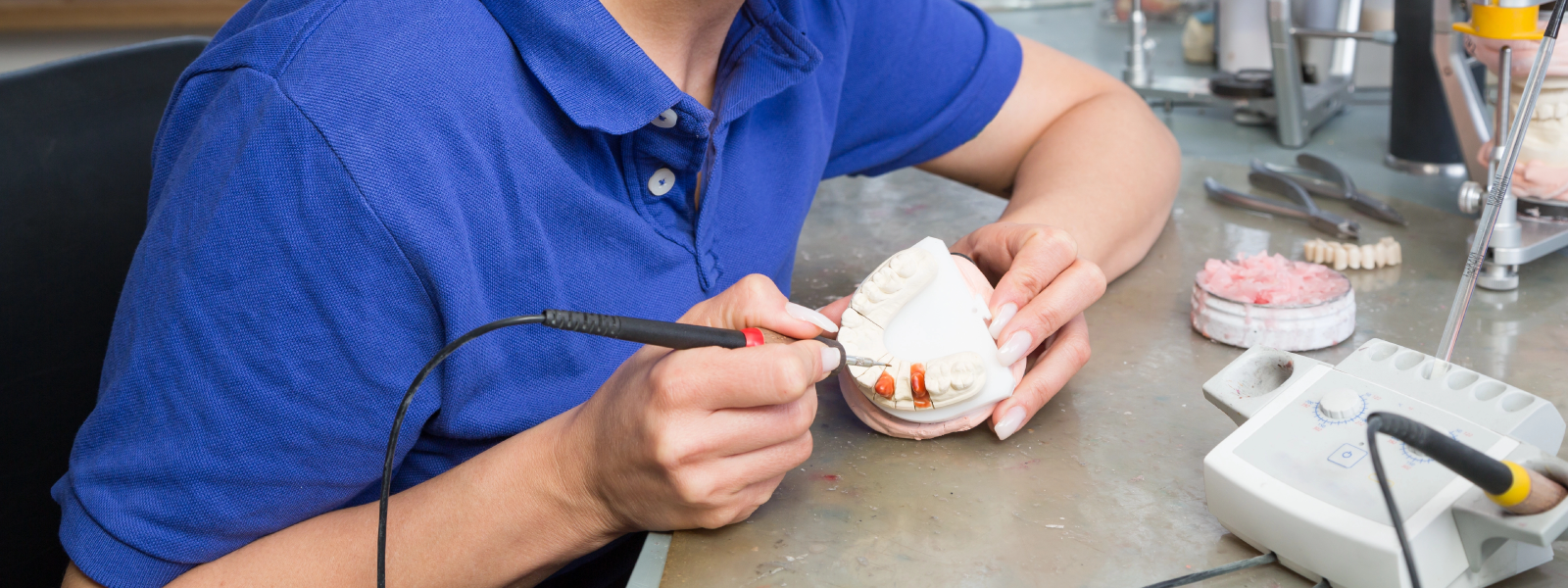
Custom dental labs fabricate a diverse array of prosthetic devices to address restorative and orthodontic needs.
- Crowns designed to cap individual teeth with materials matched to esthetic and strength requirements.
- Bridges that span edentulous spaces by anchoring to adjacent teeth or implants.
- Full and partial dentures crafted for edentulous arches or segmental tooth loss.
- Implant abutments and prosthetic crowns customized for implant-supported restorations.
- Orthodontic appliances including clear aligners, retainers, night guards, and splints for correction and protection.
These options cover most clinical scenarios, empowering you to offer tailored solutions that align precisely with patient anatomy and treatment objectives.
How Does Customization Improve Fit, Comfort, and Aesthetics?
Customization improves fit by using intraoral scans or precise impressions to digitally model each arch, eliminating the inconsistencies of stock appliances. Personalized design workflows then sculpt restorations to match gingival contours and occlusal planes, enhancing comfort and reducing mucosal irritation. For instance, a digital denture base contoured to the alveolar ridge prevents sore spots, while color-matched ceramic crowns deliver lifelike translucency and shade harmony, boosting patient confidence in their smile.
Why Are High-Quality Materials Essential for Custom Dental Restorations?
Selecting premium biocompatible materials ensures restorations resist fracture, wear, and discoloration under oral stresses, safeguarding both function and esthetics.
| Material | Key Attribute | Benefit |
|---|---|---|
| Zirconia | High flexural strength | Resists chipping and cracking |
| Lithium Disilicate (E.max) | Superior translucency | Mimics natural enamel optics |
| Porcelain-fused metal (PFM) | Metal substructure strength | Combines durability with esthetics |
| Acrylic resin | Easy adjustment and repair | Simplifies relines and repairs |
Smith, J., Journal of Prosthetic Dentistry (2020)
[Material Properties in Dental Restorations]
The selection of materials for dental restorations is crucial for ensuring their longevity and functionality. Zirconia, for example, is known for its high flexural strength, making it suitable for posterior crowns and bridges, while lithium disilicate offers superior translucency, ideal for anterior restorations.
This research supports the article’s discussion on the importance of high-quality materials and their specific attributes in custom dental restorations.
How Do Custom Dental Prosthetics Enhance Patient Satisfaction?
Personalized prosthetics elevate patient satisfaction by delivering three core benefits:
- Exceptional Fit – Tailored contours reduce pressure points and improve retention.
- Natural Aesthetics – Shade-matched ceramics and precise anatomy deliver seamless integration.
- Streamlined Care – Fewer adjustment appointments translate to lower treatment times and costs.
By addressing comfort, function, and appearance in one solution, custom dental prosthetics foster higher acceptance rates and long-term oral health compliance.
Which Advanced Technologies Are Used in Custom Dental Labs?
Modern custom dental labs integrate digital dentistry tools to streamline workflows and achieve micron-level accuracy, boosting efficiency and reducing turnaround times. By combining CAD/CAM design, additive manufacturing, and digital impression capture, labs can translate clinical prescriptions into precision prosthetics with minimal manual intervention.
How Does CAD/CAM Technology Improve Custom Dental Fabrication?
CAD/CAM systems allow technicians to design restorations in three dimensions and then precisely mill them from solid blocks of ceramic or zirconia, eliminating manual waxing and casting errors. This process enhances margin accuracy, ensures consistent internal fit, and accelerates production, reducing human variability and delivering reliable prosthetic geometry every time.
Anderson, B. (2018)
[The Role of CAD/CAM in Dentistry]
CAD/CAM technology has revolutionized dentistry by enabling the design and fabrication of dental restorations with high precision. This technology allows for the creation of restorations from solid blocks of materials, reducing errors and improving the accuracy of the final product.
This research supports the article’s claims about how CAD/CAM technology improves custom dental fabrication by enhancing margin accuracy and ensuring a consistent internal fit.
What Role Does 3D Printing Play in Custom Dental Prosthetics?
3D printing enables additive manufacturing of models, surgical guides, and provisional restorations by building layers of resin or composite material based on digital designs. This approach accelerates prototype production, offers complex geometries not feasible with milling, and produces appliances with consistent density and precision.
How Are Intraoral Scanners Used for Accurate Digital Impressions?
Intraoral scanners capture detailed 3D images of the patient’s dentition and soft tissues in minutes, replacing analogue impressions that can distort. The resulting STL files feed directly into CAD software, preserving spatial relationships and enabling precise virtual articulation, which underpins comfortable and accurate final restorations.
What Are the Advantages of Integrating Digital Workflows in Dental Labs?
Digital workflows unify scanning, design, fabrication, and finishing into a cohesive pipeline, minimizing manual handoffs and error potential.
| Workflow Stage | Attribute | Impact |
|---|---|---|
| Digital Impression | Accurate 3D capture | Eliminates distortion and remakes |
| Virtual Design | Automated margin detection | Ensures consistent fit |
| CAM Milling / 3D Printing | Precision manufacturing | Delivers high-accuracy restorations |
| Digital Quality Check | Software-guided inspection | Catches discrepancies before delivery |
Brown, L., Digital Dentistry (2022)
[Digital Workflows in Dentistry]
Digital workflows, integrating intraoral scanning, CAD/CAM design, and 3D printing, have streamlined dental processes, improving efficiency and reducing turnaround times. These workflows minimize manual steps and human error, leading to more accurate and predictable outcomes.
This research supports the article’s claims about how digital workflows accelerate delivery and improve the overall efficiency of custom dental lab services.
How Does Quality Control Ensure Excellence in Custom Dental Lab Services?
Quality control combines standardized protocols with technician expertise to verify that every custom prosthetic meets stringent safety and performance criteria before delivery. By applying regulatory benchmarks and in-process inspections, labs uphold consistency and clinical reliability.
What Are the Industry Standards and Certifications for Dental Labs?
- FDA Registration for medical device manufacturing oversight.
- ISO 13485 Certification for medical device quality management systems.
- National Association of Dental Laboratories (NADL) Accreditation indicating adherence to best practices.
- American Dental Association (ADA) Recognition for laboratory proficiency.
These credentials reassure dentists and patients that materials and processes comply with global safety and performance benchmarks.
How Are Materials Tested for Biocompatibility and Strength?
Material testing protocols assess cytotoxicity, flexural strength, and wear resistance through standardized laboratory evaluations. Biocompatibility assays ensure cell viability in contact with resins or ceramics, while mechanical testing measures fracture toughness under simulated chewing loads. This dual-axis testing confirms materials perform safely and durably in the oral environment.
What Quality Assurance Processes Are Used During Fabrication?
- Digital margin verification and internal fit analysis.
- Shade matching under controlled lighting.
- Mechanical polishing to prescribed surface roughness.
- Final inspection with magnification for micro-defects.
These checkpoints guarantee that each restoration meets precision tolerances and aesthetic specifications.
How Does Collaboration Between Dentists and Labs Improve Quality?
Open communication channels enable real-time feedback on impressions, design proposals, and desired esthetic outcomes. Shared case management platforms allow dentists to annotate digital models, request adjustments, and confirm shade selection, reducing misinterpretation and fostering outcomes that align exactly with clinical objectives.
What Are the Main Types of Custom Dental Prosthetics Offered?
Custom dental labs deliver a complete portfolio of prosthetic devices designed to restore form and function across a range of clinical presentations.
What Are Custom Crowns and Bridges and Their Material Options?
Crowns and bridges replace missing or damaged teeth with fixed restorations crafted from high-performance ceramics and alloys.
| Material Type | Characteristic | Description |
|---|---|---|
| Zirconia | Ultra-high strength | Ideal for posterior crowns and bridges |
| Lithium Disilicate | Translucent esthetics | Preferred for anterior restorations |
| Porcelain-fused to metal | Dual-layer reliability | Balances strength and natural color |
How Are Personalized Full and Partial Dentures Fabricated?
Digital denture workflows begin with an intraoral scan or conventional impression, followed by virtual base plate design and tooth setup in CAD software. The denture base and teeth are then milled or printed in biocompatible acrylic resins, finished by hand to ensure optimal tissue adaptation and occlusal balance before delivery.
What Are Advanced Dental Implant Prosthetics and Their Components?
Implant prosthetics consist of custom abutments tailored to implant angulation and soft tissue emergence profiles, paired with implant-level crowns that replicate natural tooth anatomy. These components are milled from titanium or zirconia for abutments and from high-strength ceramic for crowns, ensuring stability and esthetics in implant-supported restorations.
Which Custom Orthodontic Appliances and Night Guards Are Available?
Custom labs produce clear aligners, fixed retainers, occlusal splints, and athletic mouth guards from digitally designed models. These appliances are fabricated in medical-grade thermoplastics, offering precise fit, patient comfort, and targeted correction or protection as prescribed.
How Long Does It Take to Receive Custom Dental Prosthetics?
Turnaround times for custom dental prosthetics typically range from a few days to a few weeks, depending on case complexity and lab workflow efficiency. Digital processes accelerate each stage, minimizing delay while preserving precision.
What Factors Influence Custom Dental Lab Turnaround Times?
- Technology Availability – In-house milling and printing shorten fabrication cycles.
- Case Complexity – Multi-unit bridges and full-arch cases require more design and finishing time.
- Material Processing – Sintering or curing cycles vary by ceramic or resin.
- Communication Flow – Prompt feedback on design proofs reduces hold-ups.
Streamlined coordination between clinic and lab optimizes each factor for faster delivery.
How Do Digital Workflows Accelerate Delivery?
Digital impressions eliminate shipping delays for physical models, while automated design tools generate precise restoration outlines within hours. Integrated CAM systems then fabricate parts overnight, enabling same-week delivery for single-unit cases and significantly reducing manual turnaround.
What Are Typical Timeframes for Different Prosthetic Types?
| Prosthetic Type | Average Turnaround | Notes |
|---|---|---|
| Single Crown | 3–5 business days | Includes design, milling, finishing |
| Fixed Bridge (3 units) | 5–7 business days | Additional sintering and finishing |
| Full Denture | 7–10 business days | Involves base, teeth, and adjustments |
| Implant Abutment & Crown | 5–8 business days | Requires custom abutment milling |
How Can Dentists and Labs Collaborate to Expedite Cases?
- Digital Case Submission – Uploading scans and prescriptions directly on secure portals.
- Clear Prescription Guidelines – Providing margin lines, shade maps, and occlusal schemes.
- Timely Feedback – Reviewing and approving design proofs promptly.
- Dedicated Case Coordinators – Streamlining communication and tracking progress.
By aligning clinic and lab processes, dentists can significantly reduce turnaround without compromising quality.
Why Should Dentists Partner with a Custom Dental Lab?
Partnering with a specialized custom dental lab empowers practices to scale restorative services, reduce in-office adjustments, and access expertise and technology beyond in-house capabilities. This collaboration enhances practice efficiency and patient outcomes through predictable precision and comprehensive support.
How Does Outsourcing to a Custom Lab Improve Practice Efficiency?
Outsourcing fabrication allows dentists to focus chair time on clinical steps rather than lab processes, freeing technicians to handle complex design and finishing work. This division of labor reduces overhead, minimizes remakes, and shortens appointment schedules, driving higher case throughput and profitability.
What Expertise and Technology Do Custom Labs Provide?
Custom dental labs employ certified technicians trained in advanced CAD/CAM design, ceramic layering, digital denture workflows, and implant-prosthetic integration. They invest in the latest 3D printers, milling machines, and scanning devices to ensure clinical prescriptions are executed with micro-precision.
How Does Seamless Communication Enhance Patient Outcomes?
Transparent case management platforms allow real-time status updates, design annotations, and expedited revisions. This close interaction between dentist and technician ensures that shade selection, occlusal parameters, and material choices align precisely with clinical objectives, reducing surprises and enhancing patient satisfaction.
What Support Services Do Custom Dental Labs Offer to Dentists?
Beyond fabrication, many labs provide technical consultations on material selection, digital workflow training, shade matching services, provisional restoration design, and emergency support for same-day provisional repairs. This consultative approach positions the lab as a strategic partner in practice growth.
What Materials Are Commonly Used in Custom Dental Prosthetics?
A wide range of materials caters to diverse restorative needs, balancing strength, esthetics, and cost to achieve optimal results in each clinical scenario.
What Are the Properties and Benefits of Zirconia in Dental Restorations?
Zirconia offers exceptional fracture toughness and wear resistance, making it ideal for high-stress posterior restorations and long-span bridges. Its biocompatibility and ability to mimic natural tooth opacity ensure durable, lifelike outcomes that resist chipping and discoloration over time.
How Does E.max (Lithium Disilicate) Compare for Custom Crowns?
Lithium disilicate glass-ceramic delivers superior translucency and lifelike color gradients, making it the material of choice for anterior crowns and veneers. Its strength profile supports thin-walled restorations, allowing conservative preparations while maximizing esthetic integration.
When Are Porcelain Fused to Metal (PFM) Restorations Recommended?
PFM restorations combine a metal substructure for robust support with a ceramic overlay for esthetics. They remain a reliable solution when maximum strength is required—such as long-span bridges—while still offering acceptable esthetic blending in less-visible zones.
What Other Materials Are Used in Dentures and Orthodontic Appliances?
Custom dentures often employ high-impact acrylic resins and flexible nylon polymers to optimize strength and tissue adaptation. Orthodontic appliances and night guards are fabricated from medical-grade thermoplastics that resist deformation and deliver a snug, comfortable fit.
What Are Common Questions About Custom Dental Lab Services?
Dental professionals frequently seek clarity on core service elements—benefits, quality, technology, case workflow, and prosthetic maintenance—to ensure they select the right lab partner.
What Are the Benefits of Using a Custom Dental Lab?
Custom dental labs provide personalized fit, superior esthetics, high-quality materials, advanced digital technologies, and expert craftsmanship that reduce remakes and chair time. These advantages translate into predictable outcomes and elevated patient satisfaction.
How Do Custom Dental Labs Ensure High-Quality Results?
Labs combine certified technician expertise with multi-stage inspections, material testing for biocompatibility and strength, and adherence to FDA and ISO 13485 standards. Collaborative case reviews and digital design approvals further safeguard precision and consistency.
What Technologies Are Employed in Custom Dental Fabrication?
State-of-the-art labs leverage intraoral scanners for distortion-free impressions, CAD software for exact design, CAM milling and 3D printing for precise manufacturing, and digital quality inspection tools to confirm fit and finish before shipping.
How Can Dentists Submit Cases to a Custom Dental Lab?
Most custom labs offer secure online portals where clinics upload digital impressions, clinical prescriptions, shade maps, and bite records. Clear guidelines on margin lines and anatomical references streamline design and reduce clarifications.
What Maintenance Is Required for Custom Dental Prosthetics?
Patients should maintain restorations through daily brushing with non-abrasive toothpaste, routine flossing, and semi-annual professional check-ups. Custom night guards and aligners benefit from periodic cleaning with recommended solutions to prevent buildup and preserve material integrity.
Delivering precision-engineered restorations hinges on partnership between clinicians and specialist labs committed to advanced materials, digital excellence, and rigorous quality protocols. By integrating these custom dental services into your practice workflow, you’ll achieve faster turnarounds, fewer adjustments, and confident patient smiles that stand the test of time. Discover how a leading custom dental lab can empower your practice with tailored prosthetic solutions and responsive support—elevating both your efficiency and patient care.