
Core 4 Dental – The Best Dental Lab San Antonio
Dental practices in San Antonio need a reliable, precise dental laboratory partner that helps reduce chair time, lowers remake rates, and accelerates restorative workflows. This article explains how modern digital dentistry, agile lab networks, and focused quality control combine to deliver those outcomes, and it maps clear steps for sending cases and getting fast, predictable results. Core 4 Dental is presented here as an agile network of dental laboratories that leverages digital workflows, speed of service, and strong communication to support dentists; the emphasis throughout is on clinical benefit rather than sales. Readers will learn why an agile network model can outperform conventional single–lab approaches, how intraoral scans, CAD/CAM, and 3D printing translate to clinical advantages, and which services, crowns, bridges, implants, removable appliances, and sleep apnea devices—are available to support practice growth. Finally, the article walks San Antonio clinicians through a step–by–step “send a case” process, explains quality assurance and support mechanisms, and highlights measurable success metrics that matter to busy dental teams.
Why Is Core 4 Dental the Best Dental Lab for San Antonio Dentists?
An effective dental lab partner delivers capacity, speed, and communication so clinicians can focus on care; Core 4 Dental’s model concentrates on those outcomes through an agile production network and streamlined digital workflows. The mechanism is coordinated case routing and standardized digital protocols that reduce backlog and produce consistent restorations, which results in fewer remakes and shorter treatment cycles. For San Antonio dentists, local expertise and logistics combine with a broader network’s capacity to handle peaks in demand and complex implant cases. Below is a concise list of value propositions that explain the practical benefits to a practice evaluating lab partners.
Core 4 Dental’s core advantages for clinicians include:
- Agile Production Capacity: Multiple labs coordinate to absorb case surges and complex workflows.
- Digital Workflow Focus: Seamless scan integration and CAD/CAM enable consistent fit and esthetics.
- Speed and Communication: Real–time status updates and design checkpoints reduce delays.
- Local Knowledge with Network Scale: Regional shade and esthetic understanding plus scalable manufacturing.
These points clarify how an agile network operates differently from conventional labs by routing cases to optimize capacity and quality. Understanding the agile network concept leads naturally to a deeper look at what makes that network unique operationally.
What Makes Core 4 Dental’s Agile Network Advantage Unique?
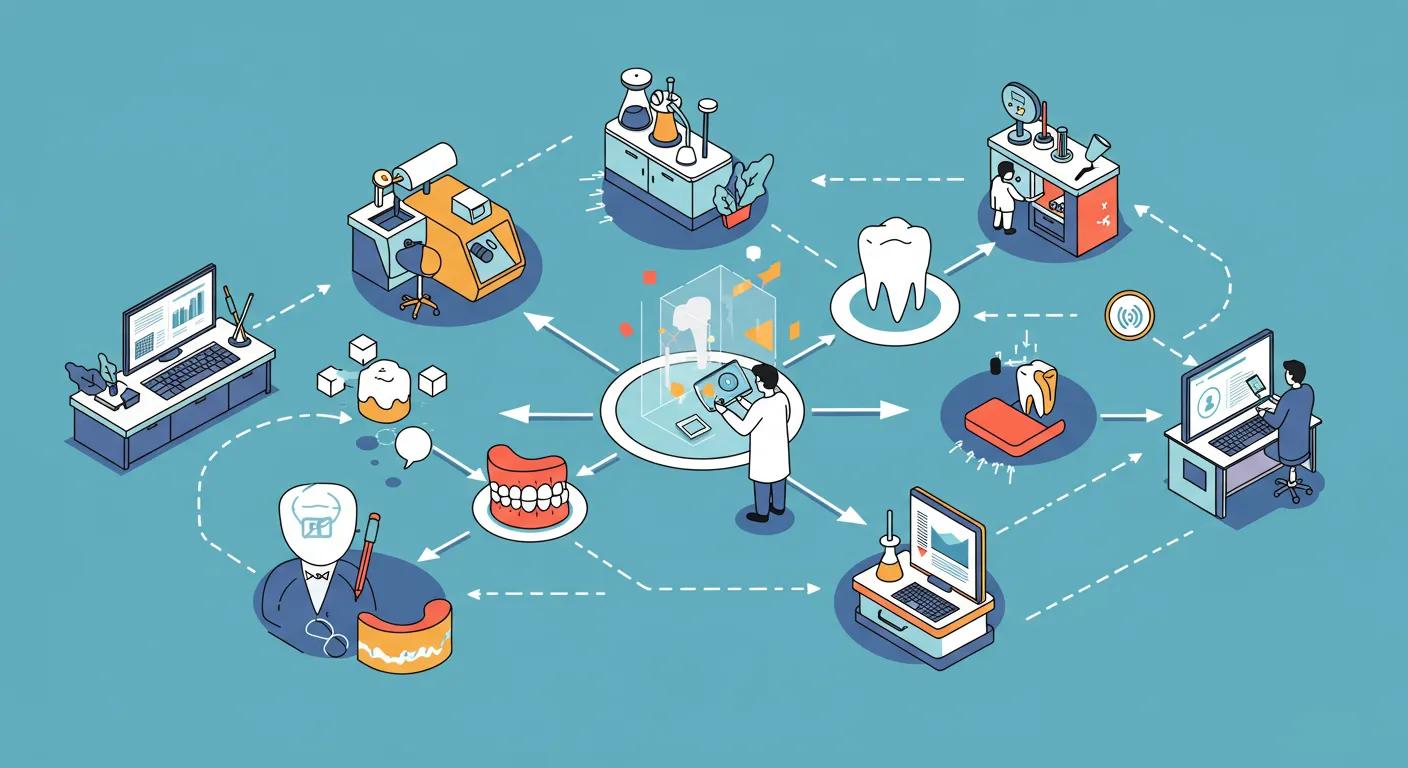
The agile network model uses coordinated laboratories and centralized protocols to distribute work efficiently, which reduces single–point bottlenecks and improves on–time delivery. Mechanistically, this model routes cases to facilities with available capacity or specific expertise for example, a zirconia specialty center for high–strength restorations so clinicians experience fewer delays and more predictable timelines. The result for a practice is measurable: lower backlog risk, faster turnarounds during peak demand, and reduced remake rates due to task specialization. Coordination also means communication channels are standardized, so clinicians receive clear design checks and production status updates rather than ad hoc messages. Recognizing how routing and specialization reduce friction helps clinicians appreciate why capacity scaling matters for DSOs and busy practices.
How Does Local Expertise Enhance Dental Lab Services in San Antonio?
Local expertise provides clinically relevant benefits such as regionally tuned shade matching, practical pickup/delivery logistics concepts, and rapid in–person technical support when needed, which collectively improve first–fit success. The mechanism is simple: technicians familiar with local esthetic preferences and typical clinical presentations can make more accurate prescriptive choices during design, reducing the iterations required for final approval. For San Antonio practices, that local layer on top of a national network translates to a better patient experience and more efficient case cycles. When local logistics and lab familiarity reduce turnaround variability, practices can plan scheduling and patient communication more reliably preparing providers to accept higher volumes of complex restorative and implant cases.
How Does Core 4 Dental Use Digital Dentistry to Improve San Antonio Dental Lab Services?
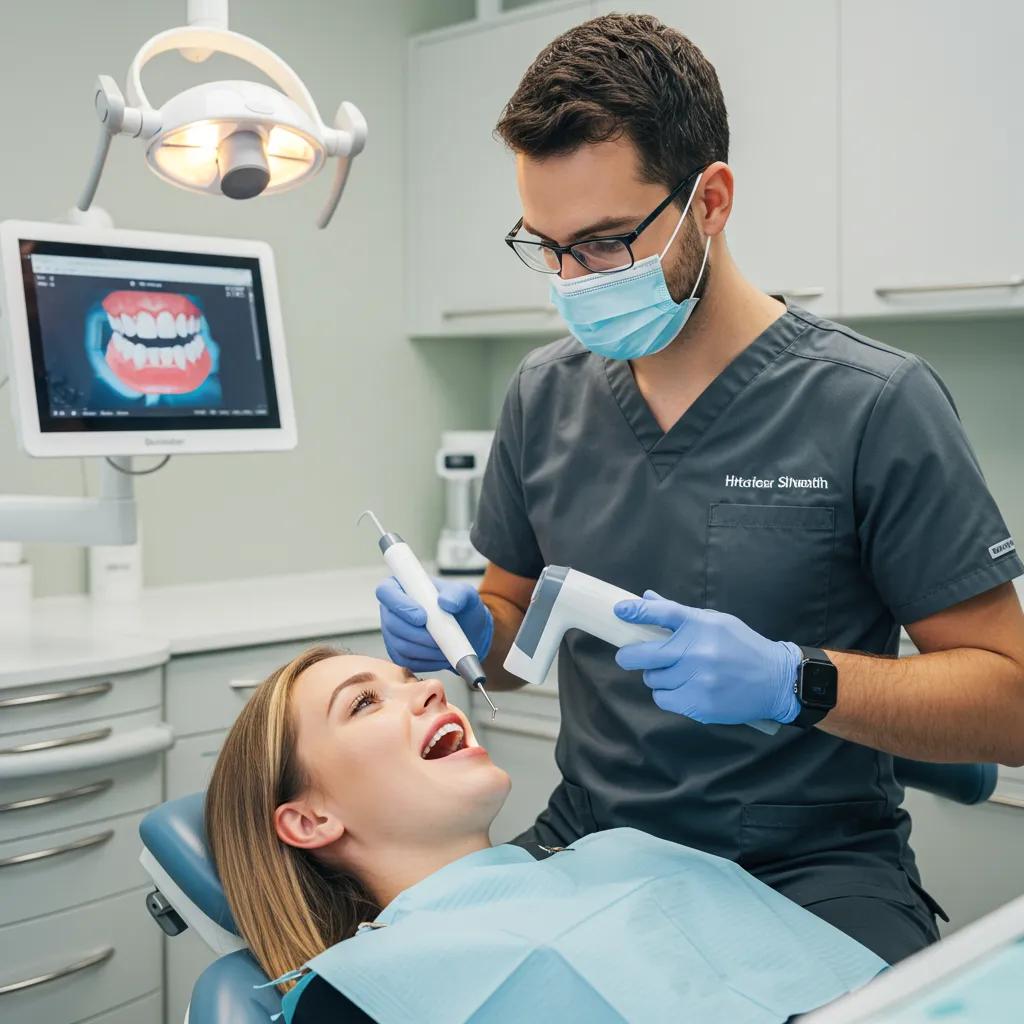
Digital dentistry combines intraoral scanning, CAD/CAM design, and additive/subtractive manufacturing to improve accuracy, speed, and traceability throughout the restorative process. These digital tools reduce physical distortion, enable repeatable esthetic libraries, and allow parallel processing that shortens the production timeline while maintaining consistent fit. Clinically, dentists see fewer chairside adjustments, more predictable occlusion, and faster final delivery outcomes that directly reduce patient time and practice overhead. The table below summarizes core digital tools, their capabilities, and the direct value they offer to dentists.
| Digital Tool | Attribute / Capability | Value for Dentist (Time / Accuracy / Workflow) |
|---|---|---|
| Intraoral Scanners | High–resolution digital impressions | Reduced impression errors and chairside rework |
| CAD/CAM Design | Digital design libraries and articulators | Repeatable esthetics and precise occlusion control |
| 3D Printing | Rapid prototype and surgical guide production | Faster turnaround for temporaries and guides |
| Milling Machines | Precision fabrication of zirconia and Emax | Durable restorations with tight marginal fit |
| Digital File Transfer | Secure, standardized file exchange | Traceability and faster design handoffs |
This table illustrates how each component of digital dentistry connects to measurable practice benefits. With that frame, we can explore how seamless digital impression workflows reduce remakes and improve case predictability.
What Are the Benefits of Seamless Digital Impression Integration?
Seamless digital impression integration accepts a range of scanner formats and preserves intraoral detail by eliminating analog cast–based distortion, which improves margin fidelity and reduces adjustment time. The mechanism is direct file transfer: intraoral scan files travel to the lab without intermediate physical impressions, lowering the chance of contamination or error and enabling immediate review by technicians. For clinicians, this means fewer return visits, more reliable provisional fits, and more efficient treatment planning because digital files can be evaluated and adjusted before any physical fabrication begins. Practical tips for submission include confirming scanner file formats and providing occlusal and shade photos to speed design approval and ensure accurate final esthetics.
CAD/CAM design creates standardized digital libraries and simulated occlusion checks that improve marginal adaptation and predictable contacts, while 3D printing enables rapid, precise prototypes and surgical guides. Mechanistically, digital articulators and parametric design features reduce manual variability and produce restorations that require minimal intraoral adjustment. The clinical benefits include improved fit accuracy, consistent esthetic outcomes using digital shade and morphology libraries, and reliable production of complex prosthetics such as implant abutments and hybrid frameworks. Examples of use cases are full–contour zirconia crowns, implant abutment design, and printed try–in models for multi–unit cases that shorten clinical appointment time.
How Do Optimized Digital Workflows Enable Faster Turnaround Times?
Optimized digital workflows parallelize steps—scan → design → mill/print → finish → QC—so fabrication phases overlap and total cycle time shortens without sacrificing quality. The mechanism includes centralized design review, automated nesting for milling/printing, and real–time status updates that avoid idle time between stages. The clinical value for dentists is faster case completion and predictable scheduling, which supports better patient flow and the ability to accept more complex cases. Expedited options and overnight workflows are practical extensions of this process, and the availability of such services depends on case complexity and approval speed from the clinician.
Which Types of Dental Crowns and Bridges Are Fabricated Using Zirconia and Emax?
Zirconia offers high flexural strength and is suitable for full–contour posterior crowns and implant–supported restorations, while Emax (lithium disilicate) provides superior translucency for anterior esthetics. Mechanistically, zirconia withstands higher occlusal forces and is often recommended where strength and durability are priorities, whereas Emax’s optical properties make it ideal for single–unit esthetic cases with adequate reduction. Clinicians choose materials based on prep, occlusion, and esthetic demands; for example, posterior molars with heavy occlusion favor full–contour zirconia, while anterior veneers or crowns leveraging translucency favor Emax. Understanding these indications reduces chairside adjustments and improves patient satisfaction with final esthetics.
What Advanced Dental Implant Solutions Are Available at Core 4 Dental?
Advanced implant solutions include custom zirconia or titanium abutments, screw–retained vs cemented prosthetic workflows, and hybrid prostheses for full–arch rehabilitation each selected to optimize esthetics, retrievability, and load distribution. The mechanism is digital planning integrated with implant system libraries and guided–surgery workflows, enabling precise prosthetic emergence profiles and improved soft–tissue support. Clinically, the choice between screw–retained and cemented restorations hinges on retrievability and occlusal considerations; custom abutments allow better tissue management and improved emergence. Integrating digital planning with restorative fabrication reduces chairside adjustments and improves implant restoration predictability.
How Are High–Quality Removable Appliances Customized for San Antonio Dentists?
Custom removable appliances combine material selection, individualized occlusal schemes, and esthetic tooth arrangement to restore function and appearance for partials and complete dentures. The mechanism includes digital denture workflows or traditional analog steps enhanced by digital try–ins, where technicians use esthetic photographs and occlusal records to refine tooth position and flange contours. Customization points, shade selection, tooth mold choice, and occlusal scheme, are critical to first–fit success and fewer remakes. Clear clinician–technician communication about prior denture history, lip support needs, and patient expectations dramatically improves initial fit and reduces follow–up adjustments.
What Sleep Apnea Solutions Does Core 4 Dental Provide?
Sleep apnea oral appliance therapy involves custom intraoral devices designed to maintain airway patency by advancing the mandible; labs fabricate these appliances following clinician prescriptions and titration protocols. The mechanism involves accurate impressions or digital scans, bite registration at prescribed protrusion, and device fabrication with retentive and comfort features tailored to the patient. Clinically, properly fabricated appliances can reduce apneic events for select patients, and labs typically provide follow–up adjustment guidance to clinicians to fine–tune comfort and efficacy. Coordinated workflows between the prescribing clinician and the lab ensure the appliance meets both functional and compliance requirements.
How Can San Antonio Dentists Easily Send a Case to Core 4 Dental?
A clear send–a–case workflow lowers friction and speeds acceptance; the process centers on preparing digital scans or impressions, submitting a concise prescription with photos, and engaging in a design approval step to confirm occlusion and esthetics. The mechanism combines standardized file formats, structured submission portals, and technician review checkpoints to minimize back–and–forth. Clinicians experience faster production and predictable timelines when the submission package includes high–quality scans, photos, and a directed prescription. Below is a step–by–step checklist for sending a digital case, with expected outcomes at each stage to set expectations.
Follow these steps to send a digital case efficiently:
- Prepare Files and Documentation: Export intraoral scan files in the scanner’s recommended format and capture shade and occlusal photos.
- Submit Prescription and Files: Upload the digital files and prescription through the lab’s submission workflow, including patient identifiers and intended material.
- Review and Design Check: Technician reviews the case and sends a design proposal for clinician approval; respond promptly to avoid delays.
- Fabrication and QC: After approval, the case moves to milling/printing and then through multi–stage quality control.
- Shipment/Delivery: Final restoration ships with tracking and documentation; schedule removal/placement appointment accordingly.