

Discover the Best Dental Lab in Los Angeles: Comprehensive Services and Digital Solutions for Dentists
Dental clinicians seeking a reliable partner for restorations and digital workflows need clear criteria to evaluate a Los Angeles dental lab. This article explains how an agile network of specialized labs operates, the mechanics of digital dentistry (CAD/CAM, 3D printing, intraoral scanners), and practical steps dentists use to send cases and manage turnaround. Many practices face delays, remakes, and interoperability problems between scanners and labs; this guide shows how modern workflows reduce chair time, improve fit, and shorten delivery windows. You will learn what makes a top dental lab partner—speed, materials, and communication—how specific services like high-quality dental crown and bridge restorations and Overnight Crowns are produced, and how dental implant planning and sleep apnea solutions integrate into a full-service lab workflow. The article covers digital services, implant solutions, crown and bridge materials, removable prosthetics, sleep appliance ordering, the exact send-a-case process, and common questions to help you choose and work with the best dental lab in Los Angeles.
What Makes Core 4 Dental the Best Dental Lab in Los Angeles?
Core 4 Dental is defined as an agile network of dental laboratories that use digital workflows to deliver precise restorations quickly, and that agility is the mechanism that reduces lead times for dentists. The network model routes cases to specialized labs for specific needs, which improves reliability and gives clinics access to niche expertise such as esthetic veneers or implant components. Dentists benefit because precision manufacturing—driven by CAD/CAM milling and 3D printing—reduces remakes and chair-side adjustments, yielding faster patient turnover. Understanding these core advantages prepares clinicians to evaluate materials, turnaround commitments, and customer service options when selecting a Los Angeles dental lab.
How Does Core 4 Dental’s Agile Network Benefit Dentists?
An agile network distributes cases across specialized facilities so workflows match clinical needs, which increases capacity and reduces bottlenecks in peak demand. This operational model means an urgent crown or an All-on-X full-arch case can be routed to the lab best equipped for that service, improving on-time delivery and technical quality. For dentists, this translates into predictable turnaround, lower remake rates, and access to niche skills without needing multiple vendor relationships. The next section explains how a consistent end-to-end digital dental workflow supports that agility and preserves accuracy across distributed labs.
Why Choose Core 4 Dental’s Digital Dental Workflow?
A digital dental workflow begins with an intraoral digital impression, continues through digital design, and finishes with CAD/CAM milling or 3D printing to produce restorations with consistent fit and esthetics. This mechanism reduces human error in impression handling and accelerates communication between the practice and fabrication teams, delivering restorations that require fewer chair adjustments. Digital workflows also enable version control and repeatable production across the network so labs can reproduce shade and fit reliably for follow-up cases. The discussion below highlights one specific speed capability that leverages this workflow: Overnight Crowns.
How Does Core 4 Dental Ensure Fast Turnaround with Overnight Crowns?
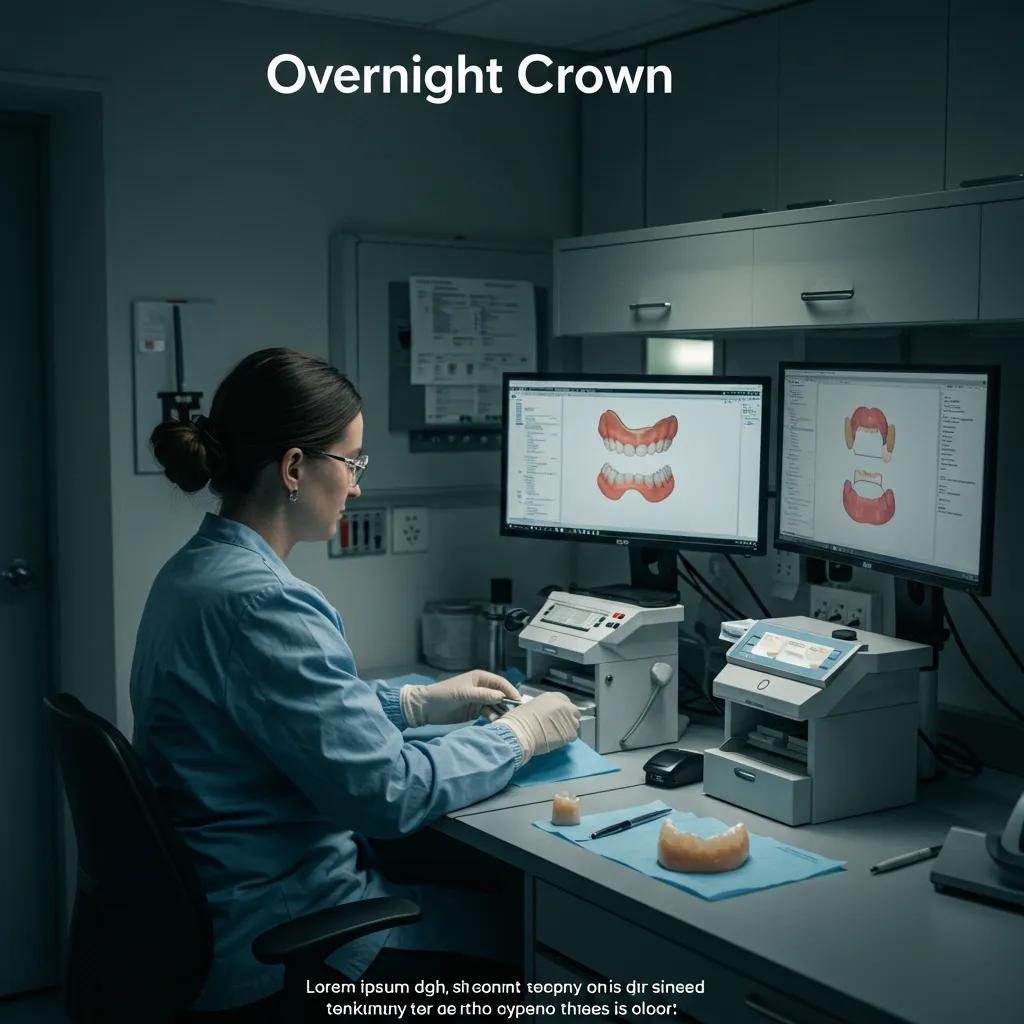
Overnight Crowns are an expedited service that compresses the digital workflow into a 24-hour cycle by prioritizing design, milling, finish, and shipping. The process depends on rapid scan acquisition, immediate digital design approvals, and prioritized scheduling on CAD/CAM milling lines to complete a restoration in a single business day. Dentists prepare cases with clear scans and shade documentation so the lab can accelerate finishing and quality control without additional back-and-forth. The following subsection outlines which high-quality materials enable rapid, durable results for these accelerated cases.
What High-Quality Materials Does Core 4 Dental Use?
Material selection drives both function and esthetics; common high-performance options include BruxZir zirconia for strength, lithium disilicate for anterior esthetics, and PFM for specific strength-use cases. Each material brings a tradeoff: zirconia emphasizes durability, lithium disilicate emphasizes translucency, and PFM balances strength with traditional layering techniques for margin control. By choosing the appropriate substrate based on occlusion and esthetic demands, clinicians reduce risk of adjustment and remakes. The next section explains how doctor-centered communication and service roles support clinicians throughout these material decisions.
How Does 3D Printing Enhance Precision in Dental Lab Services?
3D printing, or additive manufacturing, creates models, provisional restorations, and surgical guides with fine layer resolution and predictable geometry, improving fit for complex prosthetics. The additive mechanism allows rapid iteration and low-cost prototyping for trial prostheses, which supports staged full-arch workflows and immediate provisional solutions. For implant and All-on-X cases, printed surgical guides enable accurate implant placement when the guide is produced from a coordinated digital plan. The next subsection lists compatible intraoral scanners to ensure your practice’s scanner integrates smoothly with lab systems.
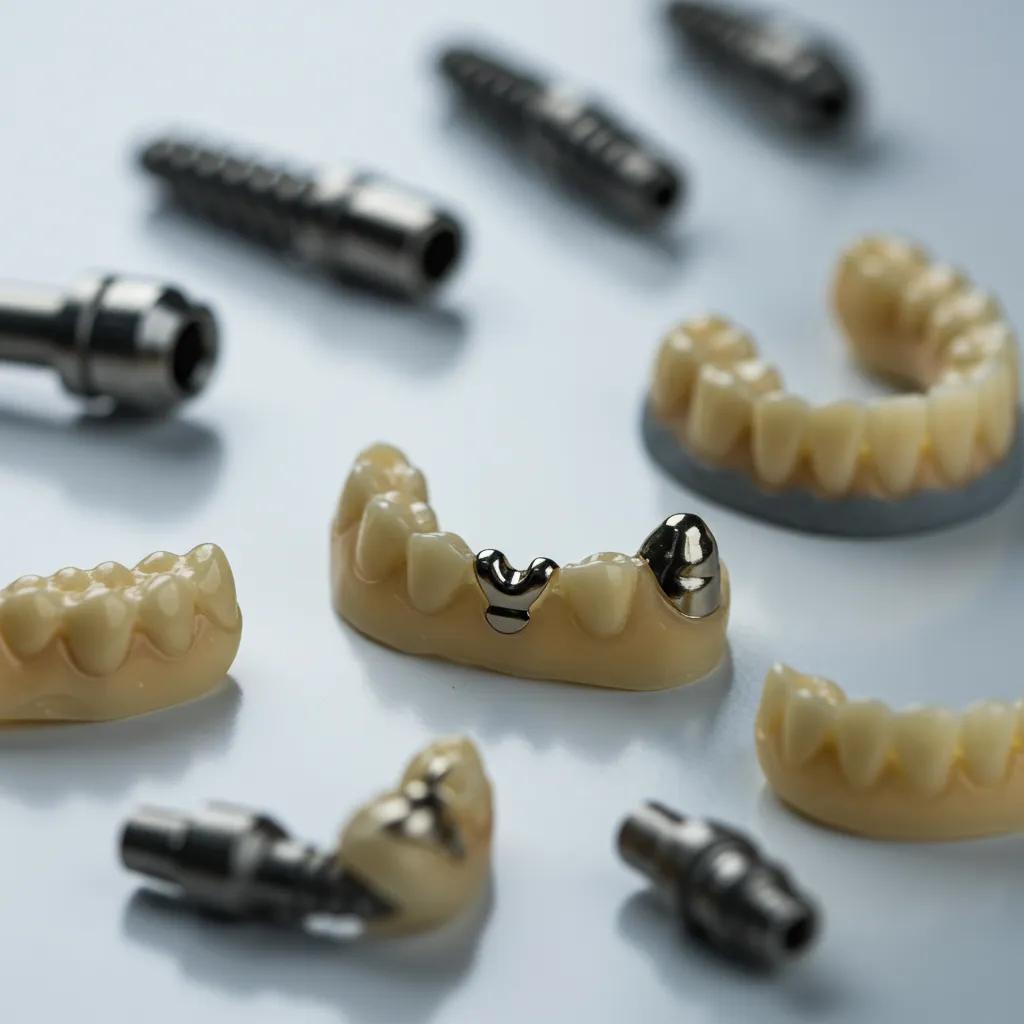
Dental implant services include implant component fabrication, digital implant planning, surgical guide production, and support for full-arch restorations like All-on-X; these offerings enable predictable prosthetic outcomes. Digital planning integrates cone-beam data and intraoral scans into a coordinated plan, then surgical guides and provisional prostheses are produced to execute that plan precisely. The lab’s implant services focus on accuracy of restorative components and collaboration across surgical and prosthetic phases. Next we explore specific implant materials and workflows.
CAD/CAM Technology and 3D Printing for Dental Implant Surgical Guides
Recently developed imaging techniques, such as cone beam computed tomography (CBCT) and CAD/CAM technology, have facilitated reliable implant planning and the production of implant surgical guides via 3D printing. This study compared the accuracy of implant-guided surgery using the R2GATE® program with CBCT, assessing outcomes both before and after surgery.
Accuracy of digital surgical guides for dental implants, J Ryu, 2022
How Does Core 4 Dental Provide Crown and Bridge Restorations in Los Angeles?
Crown and bridge services combine material science with digital production to deliver esthetic, durable restorations; choices include BruxZir zirconia, lithium disilicate, and porcelain fused to metal depending on indication. Material selection is driven by use case—posterior strength, anterior translucency, or hybrid indications requiring metal substructures. The lab’s digital fabrication reduces fit variability and streamlines shade communication, supporting full mouth reconstructions when necessary. The table below compares common restorative materials for dentist decision-making.
Before selecting a restoration material, consider strength, esthetic requirements, and expected turnaround to match patient needs.
| Material | Strength / Use Case | Esthetic Score | Typical Turnaround |
|---|---|---|---|
| BruxZir zirconia | High strength for posterior and bruxism cases | Medium-High | Standard 7–10 days; expedited options available |
| Porcelain Fused to Metal (PFM) | Durable for long-span bridges and high load | Medium | Standard 10–14 days |
| Lithium Disilicate | Excellent anterior esthetics and single crowns | High | Standard 7–10 days |
What Are BruxZir Zirconia Crowns and Their Advantages?
BruxZir Zirconia Crowns offer very high strength and wear resistance, making them suitable for posterior restorations and patients with bruxism-related stress. The material’s dense crystalline structure reduces chipping and fracture compared to older ceramic systems, while modern staining and characterization improve anterior esthetics in many cases. For clinicians, BruxZir minimizes risk of mid-term failure and often reduces the need for restorative remakes, saving chair time. Next we contrast PFM crowns to full-contour options to guide material selection.
What Services Do Digital Dental Labs Offer Compared to Traditional Labs?
Digital dental labs offer CAD/CAM milling, 3D printing for models and surgical guides, and seamless file-based workflows that reduce variability and shorten turnaround compared to traditional analog-only methods. Traditional methods still serve some complex layering or artisan veneer cases, but digital methods improve reproducibility and speed. Combining digital and conventional techniques when appropriate yields optimal esthetics and function for many cases. Understanding the tradeoffs helps clinicians decide when to use digital-first workflows.
How Long Does It Take to Get a Crown or Implant Restoration?
A standard crown typically takes 7–10 business days, while implant prosthetic components and full-arch restorations generally require 10–14 business days; expedited options such as Overnight Crowns can compress crown delivery to 24–48 hours. Complexity, shipping, and case approvals influence these timelines, and clear submissions with high-quality scans minimize delays. Refer to the turnaround table earlier for service-specific benchmarks and expedite options.